


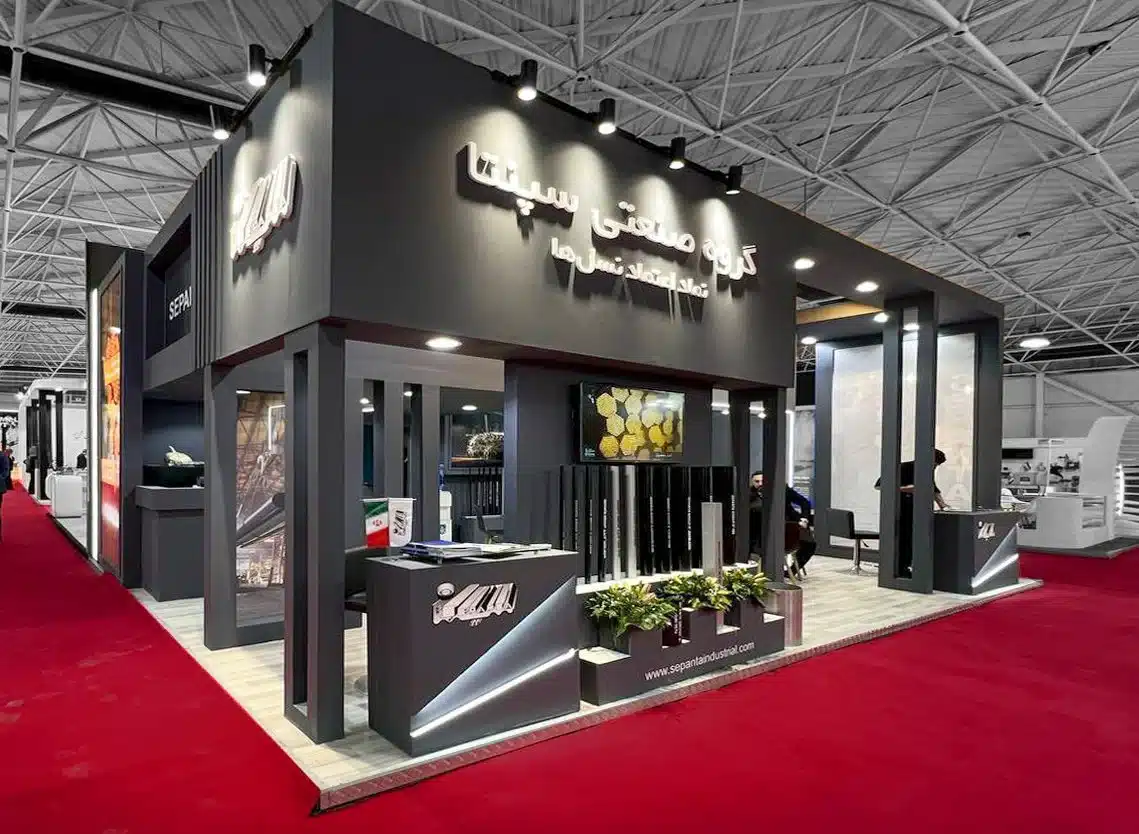





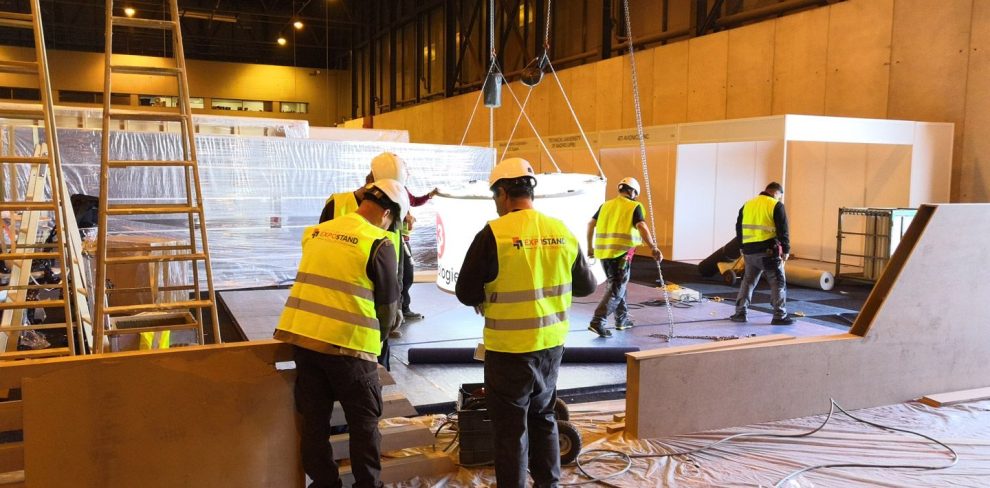
The exhibition stand construction process is one of the most crucial factors for any brand aiming to make an impactful presence at a trade show. If each phase of the process is carried out with precision, proper planning, and professional execution, the final booth will not only be visually impressive but also highly functional and effective.
Workshop Phase of the Exhibition Stand Construction Process
Once the design is approved by the client and the required exhibition permits are obtained, production begins in the workshop. All structural components such as walls, stages, counters, and display units are manufactured according to technical drawings. High-quality materials like first-grade chipboard, white MDF, and in some cases, steel frames, are used.
Each piece is precisely cut using machinery, and preliminary assembly is performed in the workshop to ensure everything fits correctly on-site. This pre-assembly step significantly reduces errors and saves time during installation at the venue.
Booth Flooring and On-Site Setup Begins
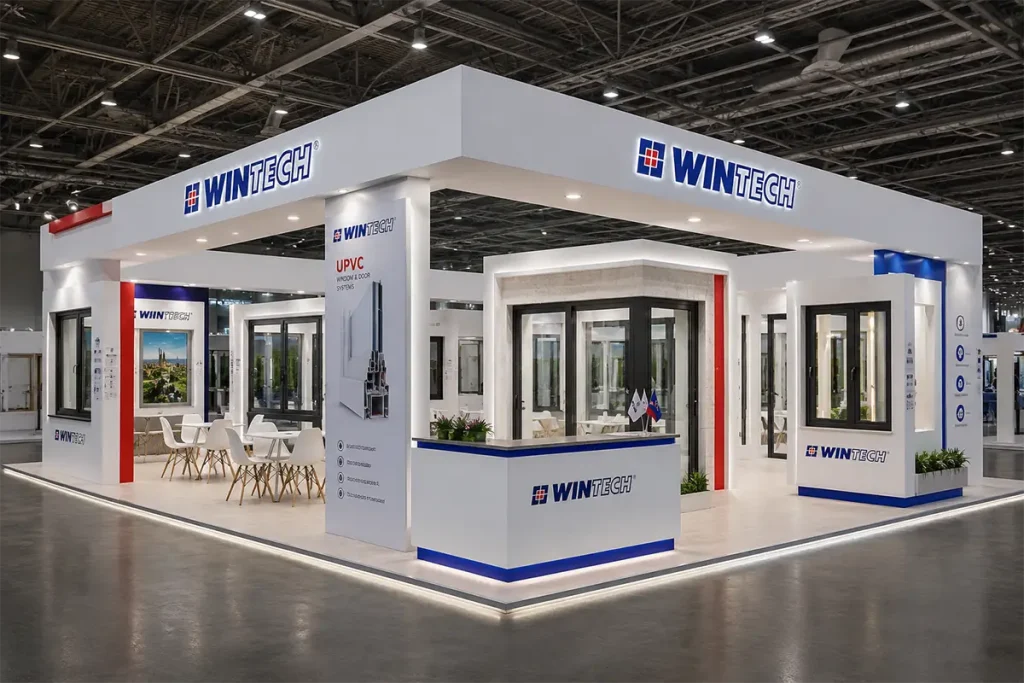
The first on-site activity in the exhibition stand construction process is flooring. Since most exhibition halls in Iran are not perfectly leveled, a raised substructure is installed using wood or steel profiles. The top surface is then covered with parquet, carpet, or PVC flooring depending on the client’s request. This not only enhances the booth’s look but also hides electrical cabling and provides a flat surface.
Booth Assembly and Structural Framework
Next, the booth starts to take shape. Installation teams begin assembling walls, partitions, counters, and overhead elements following the approved plan. Every element must be aligned, level, and securely fixed.
For custom or premium booths, structural steel frames are often used to support higher elevations or large branding elements. Sakou Design ensures that all joints are clean and safe, maintaining structural integrity throughout.

Electrical Work and Lighting Setup
While the booth is being assembled, electricians start laying cables under the flooring and routing them through walls and ceilings. Holes are drilled for downlights and LED fixtures, and main power boxes are installed.
This phase requires careful coordination between carpenters and electricians to avoid conflicts and ensure that all lighting and outlets are placed exactly as designed.
Painting and Final Surface Finish
Once the structure is complete and wiring is done, painters begin surface preparation with putty and primer. Then, the final paint coat is applied using rollers or spray machines.
A smooth and even finish plays a vital role in the overall appeal of the booth. At Sakou Design, all paintwork is completed on-site by trained professionals using high-coverage materials that match the brand’s color palette.

برای دریافت مشاوره تخصصی و ثبت سفارش، همین حالا با ما در ارتباط باشید.
Graphics and Visual Branding Installation
One of the most important steps in the exhibition stand construction process is the installation of printed graphics and visual elements. These include flex prints, stickers, 3D foam logos, backlit panels, plexiglass signage, and more.
Sakou Design prepares all graphics in advance to ensure a fast and clean installation. When lighting and graphics are well-aligned, the booth instantly stands out from the competition.
Furniture and Final Setup
Finally, all furniture and equipment are arranged. This includes VIP tables and chairs, reception counters, display shelves, TV stands, refrigerators, brochure stands, and decorative plants.

Proper furniture layout enhances the booth’s usability and helps maintain a professional and inviting atmosphere.
Cleaning and Booth Handover
The last step in the exhibition stand construction process is final cleaning and quality checks. Dust is wiped off surfaces, wires are secured, and lighting is tested. The booth is then officially handed over to the client.
At Sakou Design, every handover is performed in the presence of the project manager and the client to ensure full satisfaction. A checklist is reviewed to confirm that all elements match the approved design and meet safety standards.

