



Iranian Interior Design have always reflected the culture, heritage, and lifestyle of this land’s people. However, in today’s world, interior design must honor traditional roots while adapting to modern-day needs. In this article, we explore how to combine tradition and modernity in Iranian home interiors to create spaces that are both soulful and functional.
Key Features of Traditional Iranian Interior Design
Traditional Iranian design is based on elements like central courtyards, orsi windows, stucco decoration, tilework, handwoven carpets, and oriental layouts. It emphasizes introverted architecture, geometric order, symmetry, natural light, and local materials such as brick and wood. These homes go beyond aesthetics — they express peace, privacy, and a connection to nature.
The Role of Central Courtyards and Open Spaces
In traditional homes, the courtyard is the heart of the house. Featuring water fountains, trees, and seating areas, it promotes serenity and interaction with nature. This can be reimagined in modern homes through open central patios or indoor gardens.
How to Combine Modern Style with Traditional Elements
Successful integration happens when modern functionality is added without erasing cultural identity. For example:
- Use open-plan layouts and eliminate heavy walls, while retaining traditional rugs or wooden ceilings.
- Incorporate neutral modern colors alongside Persian motifs like “toranj” and “eslimi”.
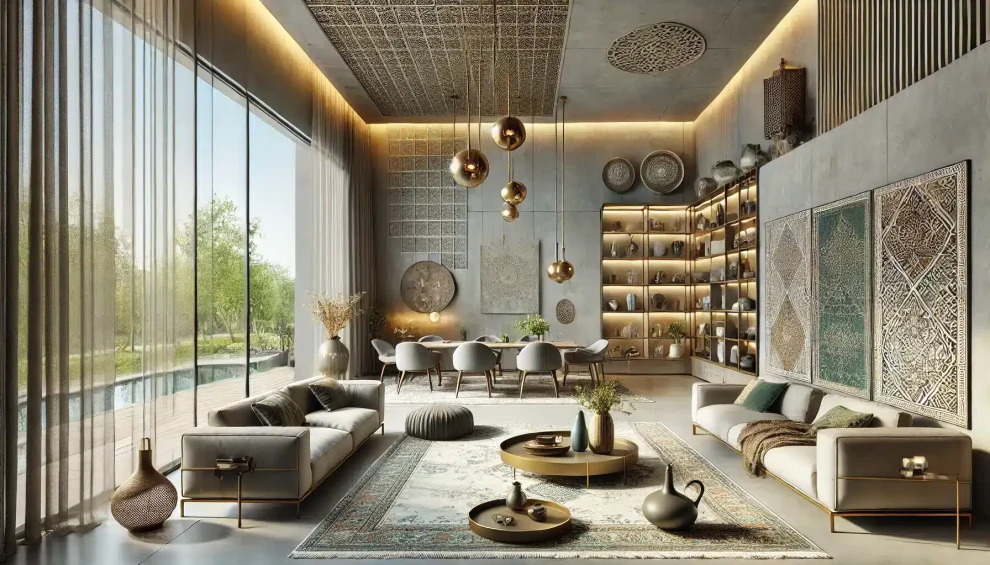
- Mix contemporary materials like exposed concrete or glass with classic elements like wood or mosaic tiles.
Blended Furniture Design
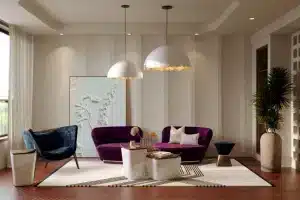
One appealing approach is to design modern furniture forms upholstered with traditional fabrics such as crimson velvet or hand-embroidered textiles.
The Role of Color, Light, and Layout in Iranian Interior Design
In Iranian architecture, colors are not just decorative they’re symbolic. Turquoise, burgundy, lapis blue, and cream are frequently used. In a modern-traditional blend, these can appear in accents like cushions, artwork, or partial wall coverings. Large windows and high ceilings help bring in natural light, evoking classic Iranian calm and openness.
Using Indirect Lighting in Traditional Spaces
Recessed ceiling lights or hidden linear LEDs can complement traditional designs, creating a warm, inviting ambiance.
How to Integrate Persian Carpets, Orsi Windows, and Kilims into Modern Interiors
While modern interiors focus on simplicity and function, Iranian character can shine through with thoughtful placement:
- Use a handmade carpet as a focal point in the living room.
- Add an orsi-style colored window to a section of the house.
- Repurpose kilims as table covers or wall art.
Incorporating Handicrafts into Decor
Combining pottery, traditional mirror work, or metal wall hangings with modern pieces keeps the Iranian spirit alive in a contemporary space.
How to Build a Home that’s Both Authentic and Practical
Today’s Iranian home should meet modern needs like home offices, energy efficiency, optimal use of space, and ample lighting. Yet, by selecting the right materials and decorative elements, one can still preserve traditional charm.
Choosing Local Materials with Modern Performance
Use lightweight wood, traditional colored fireproof bricks, and double glazed colored glass to harmonize old world aesthetics with modern technology.
Explore more interior design articles
Our Services
At Sakou Design Studio, we specialize in designing Iranian homes that blend tradition with urban modernity. If you’re looking for a home that honors Iranian heritage while supporting your contemporary lifestyle, contact us today. We offer free consultations, access to our portfolio, and customized design services tailored to your vision.
برای دریافت مشاوره تخصصی و ثبت سفارش، همین حالا با ما در ارتباط باشید.

